Search This Blog

Saturday, September 7, 2013

George R.R. Martin vs J.R.R. Tolkien


For awhile now, there's been talk about George R.R. Martin being the next Tolkien (or the American Tolkien). But how can you even compare the two? Tolkien started the modern fantasy genre. Martin didn’t really start anything. People say that Martin brought in a new kind of fantasy—realistic and gritty. But Glen Cook started “realistic” and “gritty” fantasy over a decade before A Game of Thrones was published. Sure, Martin has produced deeper characterization and intrigue in his books, but I wouldn’t say that he started anything.

In my opinion, to compare Martin to Tolkien is not fair to both writers. First off, Tolkien is an inspiration to nearly all modern fantasy authors, Martin included. Tolkien has put the “epic” into fantasy, and set the mold. No one today, if ever, will be able to build the kind of detailed world that he did—and who has the degree and time to create their own language like Tolkien did? He spent decades on this stuff. His knowledge and time spent creating his world is in itself “epic” in scale. Tolkien gave the world a story that people of all types and ages could enjoy over and over through generations. It is set in stone as a classic, and recommended reading, even for those who do not read fantasy. The story of Middle-earth has been a source for academic purposes, and a tool for the craft of storytelling and world-building. The Hobbit and the Lord of the Rings is a world-wide literary phenomenon, that will continue to pass on to my children’s generation, and to their children, and their children’s children, and so forth.

Martin is a fantastic writer that has produced a good, gritty, graphic piece of fantasy fiction. A Song of Ice and Fire is a treat in modern fantasy, and is a trend-setter, but that’s about it. Like Twilight is to Paranormal Romance, or like Fifty Shades of Grey is to Erotica, or like Harry Potter is to YA Fantasy; A Song of Ice and Fire is to modern Epic Fantasy. That’s it. It has just become popular. Just because A Game of Thrones is hugely successful doesn’t make Martin out to be some great, groundbreaking writer of our time who will set the standard for a new genre. There’s no doubt that Martin has and will inspire a lot of new authors, but every great and popular author does that. It’s nothing new. A Song of Ice and Fire is not something that can be past along to one’s children; or is acceptable to many types of people like the Lord of the Rings.

So let Tolkien be Tolkien, and let Martin be Martin… Let the Lord of the Rings be the Lord of the Rings, and let A Song of Ice and Fire be A Song of Ice and Fire… And may I add, let A Song of Ice and Fire be completed some day (two more books to go, yet no end in sight). It’s not right to compare the two authors. Tolkien is of a whole other literary time and generation; and Martin has yet to complete his series, and has grown into huge success for only the past few years. He is still with us, and has not left a legacy of great, epic literary accomplishments.

Let’s put aside the comparisons between these two authors, because it just doesn’t work. Let’s enjoy the classic, and let’s enjoy the modern—and let’s enjoy the diverse fantasy genre.

RELATED POSTS: 

Saturday, August 24, 2013

The Wizard Ingredient


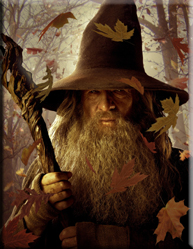
Magic is prevalent in fantasy fiction; and without it, fantasy does not exist. Mainly, magic is willed in the countless tales and books of fantasy by the likes of wizards, magicians, sorcerers, mages, druids, witches, and other types of characters. Wizard is the name mostly used in fantasy stories for a practitioner of magic (mostly male). Famous wizards in literature, such as Merlin, Gandalf and Harry Potter, have kept the wizard tradition alive and strong.

Traditionally, wizards have been depicted as tall, old and often bearded, in the likes of Merlin (Arthurian legend), Gandalf (Lord of the Rings), Allanon (Shannara Trilogy), and (beardless) Zedd (Wizard’s First Rule). However, the latest popular wizards like Harry Potter, Harry Dresden and Atticus O’Sullivan (The Iron Druid Chronicles) sport entirely more modern images.

Merlin is likely the most famous and most adapted of the wizards, spawned from Geoffrey of Monmouth’s 12TH century pseudo-history books, Historia Regum Britanniae; and later embellished by poet Robert de Boron, and many others afterward. From the original folklore, Merlin comes into being when an incubus (a demon in male form) impregnates a king’s daughter, which is why he has magic abilities. Robert de Boron’s version of Merlin’s story adds that Merlin’s mother has him baptized at birth, which liberates him from the power of Satan. Later tales formed the Merlin that we are accustomed to today—with him being the wizard advisor to King Arthur.

The wizards of Middle-earth are the Maiar, who were sent into creation by the (angelic) Valar to assist the elves and men of Middle-earth in contending with the dark lord, Sauron. Five wizards were sent, with Saruman the white as their chief. Gandalf the grey and Radagast the brown are the other two wizards that we are familiar with in Tolkien’s four books; but the “Blue Wizards”, Alatar and Pallando, are only mentioned in the Unfinished Tales edited by Christopher Tolkien.

Most other wizards in the genre do not hold such supernatural origins like the ones mentioned above. They’re generally people practicing the craft of magic, or inborn with the gift of it. Harry Potter had to become a student at Hogwarts School of Witchcraft and Wizardry to learn his magic abilities, even though his parents were wizards, but were killed when he was a baby. Harry Dresden had a wizard for a mother and a magician for a father; and he used his abilities to do his detective work. Kvothe (from the Kingkiller Chronicle) is not your typical wizard, but holds similar abilities, especially in book two when he is caught up in a battle. He learns his abilities at the University with subjects like Sympathy (sympathetic magic), Naming (a type of magic), and Alchemy.

While the old stereotypes of wizards may be fading, there is certainly no lack of creativity in the modern form of the genre for magic users. Whether they’re good, bad or gray, wizards continue to go strong in fantasy; even in the height of Urban Fantasy, in the growth of Flintlock Fantasy, and in their long reign in High/Epic Fantasy.


RELATED POSTS: 
The Dragon Ingredient 

Tuesday, August 13, 2013

Mormon Fantasy Authors


It has been a long discussion and debate over the past several years in regards to the reason(s) of why so many Mormons are successful writers of Science Fiction and Fantasy. It’s even a long discussion among Mormons themselves; many giving their different theories and assertions.

Since this is a blog that mainly focuses on fantasy fiction, I will try not to go too far into other genres of speculative fiction where there are a good portion of Mormon authors; but I would certainly have to bring up the mega success of Stephenie Meyer’s paranormal romance series, The Twilight Saga. I’ve never read the books nor have I seen the films (and probably never will), but I have certainly seen the mania that swept the world for the past several years.  

Orson Scott Card is probably the most successful in the Science Fiction and Fantasy genres when it comes to his awards and accomplishments, starting in the mid-80’s with Ender’s Game—which has finally been made into a movie, and releasing in theaters this November.

Tracy Hickman is well known for his Dragonlance books, collaborating with Margaret Weis, and also has many other works of fantasy that he’s written.

Brandon Sanderson is another best-selling author of fantasy, praised for his Mistborn trilogy, and honored to be the one chosen to complete the ultra-popular Wheel of Time series by Robert Jordan.  

A Mormon author that is probably the most acclaimed amongst the others that write YA Fantasy is Brandon Mull, with his Fablehaven books, and his latest YA Fantasy series, Beyonders.   

Dave Wolverton is popular for many works in SciFi/Fantasy, as well as a few Star Wars novels; but he is also well-known for his Runelords series, which were published under his pen name, David Farland.

John Brown is the author of Servant of a Dark God, which was published through Tor, and was supposed to be a series, but due to some “differences” in regards to the project, Mr. Brown and Tor mutually terminated the contract. The other two books in The Dark God series will be published independently by Mr. Brown.   

Anne Perry is not a SciFi/Fantasy author, as she is entirely famous for her Victorian-era mystery novels (in which I personally enjoyed a few books in her Thomas Pitt series); however, she wrote two novels, Tathea and Come Armageddon, which were categorized as fantasy, but are really more of religious allegory.

The list of authors above, of course, doesn’t cover all the Mormon writers in genre fiction, but it gives us a view of the success and impression that these folks of the Mormon faith have on speculative fiction. Some say that it is due to their belief in Mormon theology that these Latter-day Saints tend to be drawn to write almost exclusively in speculative fiction—as they explore their beliefs and imaginations through fiction. Others say that it is the close-knit writing community that the Mormons have. Some say it’s both. When reading statements from Orson Scott Card and Brandon Sanderson, as well as other Mormon writers (published and not published), regarding this subject, everyone seems to have their own opinions. I’m not Mormon, so I dare not debate the reasons, but it makes a lot of sense to me that if you have a tight community of people who love genre fiction, and they have a large focus on writing and reading in their schools and universities, then it’s obvious that you will see a lot of writers come out of that circle. Keep in mind that these are authors producing pretty good fiction, and published by major houses; so the classes and writing workshops must be doing something right. There’s also a lot of support within the community. So when you have successful writers teaching, inspiring and supporting aspiring authors in the community, it makes fertile ground for more successful writers to sprout out of.

People say that there is a disproportion of SciFi/Fantasy writers that are of the Mormon faith, but I don’t really agree with that. Sure there are a lot of authors in the genre that are Mormon, but I would not say that they dominate the genre. There are still more authors who do not profess a religion or have a different belief system. The real dominating community in the genre is geeks (people who love fantasy and role-playing games).

The good thing about Mormon authors is that they are moral writers. I feel that the fantasy genre started off in the beginning with stories that encouraged morals. Today, that is missing in the genre, especially with the rise of dark and gritty fantasy and urban fantasy. You can pretty much rest assured that when you pickup a book by Tracy Hickman you’re not going to find scenes of sex or foul language. Even Stephenie Meyer’s Twilight series had the main character saving herself for marriage. Imagine if Laurell K Hamilton or Sherrilyn Kenyon had written the Twilight books; Bella would’ve been getting it on with the vampire and the werewolf—at the same time.

That’s the great thing about the fantasy genre: that folks of all walks of life and beliefs can write and read in the genre; and we all can enjoy multiple types of stories according to our tastes. Lovers of fantasy fiction are a community of their own, made up of many types of people.         

Monday, August 5, 2013

The Dwarf Ingredient


Like elves, my introduction to dwarfs was through popular culture; particularly Disney’s Snow White and the Seven Dwarfs and The Hobbit cartoon. The dwarf was my favorite character to play in the Sega video game, Golden Axe—that axe of his was lethal, and his ramming move was so cool. Dwarfs (or dwarves; a spelling made most popular by J.R.R. Tolkien) are the stuff of Norse and Germanic mythology, and have been a key ingredient in high fantasy since Tolkien made them popular in his Middle-earth world.

The classic archetype of dwarves in fantasy is the stocky, long-bearded beings who live in the mountains, smithing and mining; usually keeping to themselves. With the Dragonlance and Forgotten Realms novels, the dwarf archetype continues with very little creativity. German writer Markus Heitz tried to give dwarves an interesting spin in his Dwarves series, but nothing entirely unique. But, I have heard of an out-of-print book by Gordon R. Dickson, called The Earth Lords, which is set in the frontier of late 19TH century Canada, where dwarves enslave humans under the earth, and are plotting to eradicate mankind. This is a stand alone book that sounds like it may be worth reading, just to see what kind of story unfolds with such a concept.

I will name three dwarfs that have stood out to me in fantasy fiction—yet one is really not a dwarf at all. First is Gimli from the Lord of the Rings trilogy. To me, Gimli is not the greatest of characters; however, his relationship with the elf, Legolas, is quite memorable. The dwarves and the elves in Middle-earth have an ancient feud with one another, but Gimli takes a big step to be the first of his kind to befriend an elf—even giving reverence to Lady Galadriel—making him a good character, in the sense of casting aside old prejudices.

Second is Jugar from The Annals of Drakis trilogy by Tracy Hickman. When reading the series, I could not get enough of Jugar. I loved him; even to the end. He was witty, funny, mysterious, and was the igniter and extinguisher of the entire trilogy. I thought Hickman did a superb job in having the reader believe that Jugar was one way, when really he was a whole other person. You have to read the series in order to know what I’m talking about; but, Jugar is a character I continue to think about, even long after reading the books.

Last is Tyrion from A Song of Ice and Fire by George R.R. Martin. Tyrion is not a dwarf, but is a man that was born with dwarfism; like many people in real life. I join the rest of the fans of the series in saying that Tyrion is definitely one of my favorite characters in the books. He is a man that has to hold his own, and keep his wits about him in a world where men and women look down on him, not just in the literal sense, but figuratively as well. He is surely not a saint, but has his moments of being likeable. I think Martin did a fantastic job in putting Tyrion Lannister in his series, shattering the “dwarf” stereotype. I can’t think of the books being anything without him.

In conclusion, dwarves have certainly been overused in the fantasy genre; and are often not fleshed out very much, with the exception of the characters mentioned above. Like I have mentioned regarding other “ingredients” that I have posted about in the fantasy genre, dwarves need to be given a unique overhaul; keeping true to their essence, but going deeper than what has been presented to us thus far.

RELATED POSTS: 
The Dragon Ingredient

Sunday, July 28, 2013

Satan Isn’t Scary Anymore


I’ve been reading a collection of the classic tales of Solomon Kane by Robert E. Howard, and I’ve noticed just how dated these stories are. Don’t get me wrong, they are well written and quite entertaining. But what I’m referring to in this instance is whenever Solomon Kane faces the other-worldly creatures in these tales they’re usually described as something from hell, or like Satan himself. Though there are a lot of creepy things that Solomon Kane faces, and Howard does a good job of describing how horrific the creatures are, it doesn’t scare me like the readers who read them around the time the stories were published. These stories were written in the late 1920’s and early 1930’s. This was before television and horror movies desensitized people; a time where dark, supernatural things, especially the Devil, were something feared whenever thought of.

Dante Alighieri’s 14TH century allegorical poem, Inferno (better known as Dante’s Inferno), depicted Satan trapped in the middle of Hell, waist-deep in ice, giant, with three faces, gnawing on traitorous men like Brutus, Cassius and Judas Iscariot. In John Milton’s epic poem, Paradise Lost, Satan is the defier against God, rebelling and taking a third of the angels with him and warring against the heavenly host. He is the deceiver of mankind.

It seems like in the 60’s, 70’s and 80’s, mediums of all sorts used Satan as the image of absolute fear and evil. He was in literature, horror films, and Rock/Heavy Metal music. I remember being a kid in the 80’s and Satan seemed to be everywhere in the movies, in music, and in the news (Satanic crimes and murders). Now, it seems like all that started to fade out in the late 90’s, and the fearful image of Satan has been swept under the rug; and no one recalls much of it anymore, except to say, “Remember when?” 

In fantasy fiction, many villainous characters have been inspired by Satan. Those who have not read past The Hobbit and The Lord of the Rings may think that Sauron is the Satan figure in Tolkien’s creation. But when you read his other works, like The Silmarillion, you find out about the one who Sauron was seduced by, and who Sauron served. That is Morgoth, who was Melkor before he turned to darkness. Morgoth, like Satan, was the most powerful of his kind, but wanted to do things his way and rebelled against the creator, Eru, and brought darkness to creation. After Morgoth was defeated and cast into the outer void, Sauron imitated his master, thus continuing the likeness of Morgoth. 

In C.S. Lewis’ The Chronicles of Narnia, Jadis, the White Witch, rebels against her sister, refusing to submit to her and wanting the throne for herself. She later usurps the throne of Narnia and plunges the world into a dark winter for 100 years. She has minions of all types of evil creatures. All traitors belong to her, and as we see in The Lion, The Witch, and The Wardrobe, she means to take Edmund’s life (since he was declared a traitor), but Aslan (the Christ-figure in the books) chooses to die on his behalf. The White Witch leads the “crucifixion” (so to speak) of Aslan, with all her minions; just like Satan had his way with Jesus on the day of his crucifixion. 

Even The Wheel of Time books by Robert Jordan have the Dark One, also known as Shai'tan, which is Arabic for adversary, which is the same meaning for Satan. In Jordan’s series, Shai’tan, the Dark One, is known as the “opponent of the Creator’; and was bound by the Creator at the moment of creation.

Things get twisted around in Anne Bishop’s Black Jewels trilogy; a dark fantasy where the character, Saetan, the High Lord of Hell, is the good guy, as well as those who dwell in Hell. In this world, Darkness is the power of right; basically good and evil are reversed.

Piers Anthony’s Incarnations of Immortality series is basically about mortal people becoming immortal incarnations of Death, Time, Fate, War, Nature, Evil and Good (Satan is the incarnation of Evil). The first five books simply deal with Satan using and tricking these newly turned immortal incarnations for his own evil purposes, and these incarnations fight against him. By book six another mortal assumes the incarnation of Evil (Satan), but he actually has a good side, and the evil things that Satan has done in the past begins to become rationalized and seen to be for some greater purpose.

More recently, Sara Douglass’ novel, The Devil’s Diadem, is set in 12TH century England where there is a mysterious plague sweeping the land, and it is later found out that imps from hell and the devil himself are sending the plague in search for a stolen artifact.      

In closing, Satan has been used and imitated in fantasy fiction and allegory for generations, and it appears that his likeness is diminishing more and more in the genre; save for a few elements in urban fantasy, which deals more with demons in different fictional representations. The more you look at it, the dark lord imitation of Satan is becoming yesterday’s element in the genre, as Satan and Satan-like characters no longer scare us or have us biting our nails in suspense, because it’s been used and told and retold so many times. More and more villains in the genre are simply appearing as the dark side of man, or just an opposing force. Satan isn’t scary anymore. But the ancient telling of this being, fallen from grace, through the Bible, and reinterpreted through the mythologies of many civilizations and stories up to today, is epic in scale. It is the source of the retelling of the clash between good and evil, which drives the majority of the genre. 


Saturday, July 20, 2013

The Elf Ingredient


When I was a kid, whenever someone talked about elves, the first thing to come to mind were the little people that helped Santa make toys at the North Pole; or those little men that helped the poor cobbler make an abundance of shoes while he slept at night; or those little Keebler elves that made awesome cookies. And don’t forget Snap, Crackle and Pop, the elf mascots for Kellogg’s Rice Krispies. Richard Doyle’s illustrations in Andrew Lang’s 1884 fairy tale, The Princess Nobody, gave us the image of cute little elves, as described in Lang’s fairy tale.

When I discovered Tolkien’s tall, beautiful beings of Middle-earth I thought to myself, “these are elves?” Fairy tales and children’s fiction had given me images of little people with pointy ears in stockings; and I was oblivious to Norse mythology, which is where modern fantasy derived it’s depictions of elves. With characters like Legolas, Elrond and Lady Galadriel, Tolkien sparked a love for elves, and writers of the fantasy genre have been staffing their books with elf characters ever since.

Next to dragons, elves have to be the most widely used mythical character in fantasy. Before fantasy was even a genre in literary fiction, The King of Elfland’s Daughter by Lord Dunsany was published in 1924. The novel is a fantasy classic, telling the story of the mortal man, Alveric, who ventures to Elfland to find and marry the lovely elf princess, Lirazel, the daughter of the King of Elfland. Alveric weds Lirazel and they have a son together, but Lirazel grows homesick for Elfland, and Alveric has to search for her again, after she leaves for her homeland. It’s a fantastical story with poetic prose, complete with elements of magic and romance, with a witch, unicorns and a troll as part of the journey. Lord Dunsany’s novel surely is part of the roots of modern fantasy; but Tolkien’s release of The Hobbit in 1937 was big, and, nearly two decades later, The Lord of the Rings became even more significant. Elves in fiction had never been portrayed like what was seen in Middle-earth, and this pretty much set the standard for modern fantasy fiction.

One cannot leave out Poul Anderson’s 1954 (forgotten) classic, The Broken Sword, which is grittier and faster paced than Tolkien’s work; and is heavy in the Norse myth in regards to the elves and the setting. The elves in this book are not worth remembering like Tolkien’s crafted characters.

Elves have continued throughout the works of many fantasy writers in their series for decades; like Terry Brooks with his Shannara books, Raymond E. Feist with his Riftwar Cycle series, as well as the Dragonlance and Forgotten Realms novels. The aim these days is to break the Tolkien tradition of elves; and there was even a period where there was focus on producing more dark and evil elves.

Probably the most famous of the dark elves (or drow—ebony-skinned elves) is Drizzt Do’Urden. Drizzt was created by author R.A. Salvatore, and written about in 18 different novels (introduced in the Icewind Dale Trilogy, but made most popular in the Dark Elf Trilogy). Dark elves are known for being evil (generally) and living underground, but Drizzt chose to forsake his people’s evil ways, taking to the surface, where he learned to be a ranger and eventually became a hero in Northwest Faerûn.

Two compelling series of fantasy fiction where elves were depicted as cruel overlords are the Halfblood Chronicles by Andre Norton & Mercedes Lackey, and the Annals of Drakis by Tracy Hickman. In the Halfblood Chronicles, the elves came from another dimension and took over the Earth, enslaving mankind. In the Annals of Drakis, elves have built an empire where they enslaved many races by the use of aether magic, which makes the slaves forget their past, and they think their lives are fine and noble under the rule of the elves. The difference with the elves in Hickman’s series is that they are not the attractive elves we’ve come to know in the genre. These elves have elongated heads, sharp teeth and black eyes. Basically, they’re kind of creepy; especially when one of the females has a thing for the human hero of the story.

There are so many books that I could point to that harbor elves within their pages. Like many ingredients used in fantasy fiction, this is one that has been used in epic/high fantasy abundantly. Elves have been key characters in high fantasy since the beginning; and there looks to be no end in sight.


RELATED POSTS: 
The Dragon Ingredient

Saturday, July 13, 2013

From Book to Screen


My love for fantasy started when I was a kid, watching cartoons and movies in the genre. I didn’t get into fantasy books until I was a teenager, and I can definitely say that it was due to those cartoons and movies that I was drawn into reading fantasy fiction. Today, cartoons are nowhere near what they were in the 70’s and 80’s, back when they were saturated with entertaining fantasy settings; and the same goes for movies. However, the successful adaptations of The Lord of the Rings, The Hobbit, The Chronicles of Narnia and Harry Potter to the big screen have given fantasy fiction a good face, and may be helping the genre like never before. Even the Game of Thrones adaptation on HBO is giving the “adult” side of fantasy a boost in sales (probably more so for Mr. Martin).

Fantasy stories have been adapted to film since the early days of cinema, but Disney’s adaptation of the Brothers Grimm’s, Sneewittchen, better known as Snow White & the Seven Dwarves, was the first to break ground—becoming the first of it’s kind. Not too long afterwards, MGM released the Wizard of Oz, based on L. Frank Baum’s 1900 novel, The Wonderful Wizard of Oz. Disney is keeping the Oz legacy going with their latest release of Oz the Great Powerful, with sequels to follow. I personally enjoyed the new Oz movie, and hope that the follow-ups are just as good, if not better, even with Sam Raimi showing no interest in directing the sequels.

In the early days, fantasy books could only be effectively made for the screen via animation, hence Disney’s success with movies like Cinderella, Alice in Wonderland, Sleeping Beauty, and the Sword in the Stone. It was the animated features of The Hobbit, The Lord of the Rings, and the Return of the King that drew me in as a kid, topped off with The Last Unicorn.

Finally, when the 80’s came, probably the first time I ever really saw a live-action fantasy flick (apart from The Dark Crystal, which was not adapted from a book) was the first time I saw Arnold Schwarzenegger. He played Conan in Conan the Barbarian and Conan the Destroyer, based on Robert E. Howard’s character. I watched those movies every time they came on TV. The Neverending Story was another movie I had watched over and over. I never read the book, but the author, Michael Ende, felt that the movie was so far different from his book that he wanted the movie to stop being made, or else change the title of the film. The makers of the movie continued with the production anyway. Ende was an advisor for the script, but he claimed that the director/screenwriter, Wolfgang Petersen, secretly rewrote the script. However, Petersen insisted that the movie was very faithful to the novel.

The Princess Bride movie was a well received adaptation by audiences, and fans of the book seemed to love it as well. The author, William Goldman, did the screenplay for the film, which is probably why it was conveyed to screen so effectively. The screenwriter for the Stardust film tried to bring a Princess Bride kind of feel to that adaptation. Neil Gaiman, the author of the novel, seemed okay with the changes and adjustments in the movie, which were different from the book.

Eragon and The Golden Compass, are probably the most failed adaptations. These films were supposed to spark a new series of movies based on the novels, but failed to project strong stories on screen. In my opinion, Eragon was not very good, but The Golden Compass wasn’t too bad. But, from those who read the book, The Golden Compass movie was said to have been too close to the book (cramming in a lot), and failing to include a vital part at the end.

It’s always said that the movie is never as good as the book, because the movie cannot offer the depth of characters and world-building like the book can. However, many people cannot suffer through Tolkien’s long descriptions, but they’ll eat the movies up. We should give thanks to Tolkien’s detail, because it gave Peter Jackson and his crew everything they needed to create a visual Middle-earth. We have to understand that literary fiction and cinema convey stories in extremely different ways. One deals with capturing the mind and imagination, while the other deals with capturing our eyes and ears, as well as our minds. The problem with a lot of fantasy movies is that the makers work hard to dazzle us with sights and sounds, but fail to capture our hearts with solid storytelling and good acting. In literature, the writer has to pull us into their world and convince us to take the characters’ journey.

When a fantasy book is adapted to the screen, it's probably most assuring that changes would have to be made to make the story effective for viewers; but it’s important for the screenwriters and directors to render the spirit of the book to the fullest. I am glad to see fantasy books transferred to the screen effectively, and it’s keeping the fantasy genre strong. Not only that, but we get to see the stories that we enjoyed in our heads for so long displayed with the best visuals that the industry can dish out.

I’m not going to lie, as an aspiring writer, I dream of seeing my book on the big screen some day, with hundreds of millions of dollars funding the production, and everyone falling in love with it. Like I said, it’s a dream. But, I know that I am not the only one. Lots of authors dream of their stories becoming movies, but there is the fear that their baby (their book) would not be given due justice, and the whole thing could turn into a disappointment, like Michael Ende, mentioned above.

I am optimistic that more good fantasy novels will continue to be produced well for the screen, and we will enjoy them for years to come. But I hope that filmmakers learn from past failures, and aim to stay true to the heart of the stories. 

RELATED POSTS: 
From Book to Screen (Revisited)

Wheel of Time TV Series