Search This Blog

Saturday, October 19, 2013

Discussion Panel on Epic Fantasy - VIDEO

I found this video to be an interesting discussion on Epic Fantasy. See video below (divided into 4 parts).

A panel from the World Fantasy Convention in 2010, featuring David Drake, John Fultz, Blake Charlton, David B. Coe and Freda Warrington.

Filmed by Moses Siregar III of http://sciencefictionfantasybooks.net

Part 1 of 4


 Part 2 of 4
  
 
 Part 3 of 4


 Part 4 of 4


Saturday, October 5, 2013

Good vs Evil


Just about every fantasy story is based on the struggle between good and evil. How many dark lords have been defeated by the hero and his band of friends? How many wicked witches have been vanquished by innocent youths? How many dark wizards have met their end against the gifted brave? How many warlords have been defeated by the noble king? I could go on and on. The battle between good and evil is the foundation for almost every kind of fiction (fantasy, action, thriller, suspense, horror, etc). We go to the movies and we sit expecting to root for the “good” guy against the “bad” guy. It’s common in our culture, and it’s common in our nature. Mythology and folklore have been saturated with it for centuries.

In today’s fantasy fiction, there are times where we expect to root for the antihero. There are times where we see the lines between good and evil blurred. We’ve come to a place where the “all-good” hero and the “all-bad” villain no longer appeals, and shows no realism. It’s funny to see the genre which was supposed to be a vehicle of discovering the fantastic and speculative—to take us away from reality—is now being forced to make things as realistic as possible (in which I agree with). But I think the main purpose is to make things believable in the author’s created world, while giving the reader characters that are realistic.

It seems like today’s modern fantasy is trying to veer away from characters that are good and evil, and just make the characters grey (or amoral). This is a good thing for the genre, but it’s not good if this is done only to rebel against the old tradition of good versus evil. It should be done because that’s what the story calls for, and that’s who that character is. Also, a character shouldn’t be made dark just to put a dark spin on the story. There should be a believable reason why that character is that way.

There’s the belief that there is no absolute good or evil. But if someone believes in an all-good higher power, and believes that any force that defies that all-good higher power is evil, then there is absolute good and evil, in that concept. If someone does not believe in an all-good higher power, but believes that society sets the standards of what is right and wrong, then there is a degree of good and evil; for if anyone goes against what your society believes to be the right thing, then that person could be seen as evil in a way, and vice versa.

In the real world, there is good versus evil. That’s realistic. The generation known as the Greatest Generation, who fought Nazis in World War II, were not saints, but they were the good guys, going up against an evil empire. What Hitler did was evil. The Allies that fought him were good. That man that took those girls in Ohio and held them captive in his house for a decade, doing terrible things to them, did evil; and the people that helped those girls escape did good. A person that walks into an elementary school and slaughters children does evil; the people that tried to save those children, and tried to stop the murderer were good. The people that go and blow up innocent men, women and children are evil; the people that fight to stop those people are good. Do you see what I’m getting at here? Unfortunately, in our world, we see the evil that people do all the time. Fortunately, we see the good that people do all the time as well.

The key point here is that the struggle against good and evil is a part of our world, and of our existence, since the dawn of man. The battle of good and evil happens in the world, and it happens inside each and every person, as they make the choice to do the right or wrong thing everyday. This is reality, and this is the good against evil that we should see in fantasy fiction. So if an author is only going to give us grey characters, then show us readers why that character is that way. Also, show us the struggle inside the character as he/she strives to be a person that does the “right” thing; or if he/she strives to do the “wrong” thing.

So, authors of the dark and gritty, don’t try to make it an effort to exclude good and evil from your stories; but try making an effort to make your stories more realistic by including good and evil in the degree that your story calls for. Again, this could be an external struggle or an internal struggle for the character(s).

I think the things that bother us modern readers, in regards to the old-fashioned good versus evil plot, is that the hero and the villain have no depth. They’re just put there to fight each other, with nobility as the hero’s reason, and power and greed as the villain’s excuse. Readers want to get into the soldiers’ minds, and into the Nazis’ minds, so that the struggle becomes an explosion of good story, with depth and conflict; and the climax at the end is not predictability (even though you know the good guys will win), but a conclusion where you feel the triumph of the protagonists, because you fell in love with them, and you wanted them to succeed. 

Click here to see Part 2 of this post.


RELATED POSTS: 
Good vs Evil – Part 2

Saturday, September 28, 2013

The Royal Ingredient


It’s quite difficult to find a fantasy novel that does not have some sort of character or plot dealing with royalty. Even if the central focus of the story and its characters have nothing to do with sovereigns, thrones or kingdoms, there still tends to be someone or something in the plot that relates to things of royalty. I believe this is mostly due to the setting of most fantasy worlds taking place in a medieval-type era. The Middle Ages was a period of emperors, kings and lords.

Another look at this is that the utter most of us do not stem from royalty; therefore, experiencing the royal lifestyle is the dream (or fantasy) of many people. I think that’s why a lot of the western world is so fascinated with the royal family of England—it’s like a fairytale—something so far from us, and unattainable, that it’s like a fantasy.

So it has been since the dawn of fantasy fiction that kings, queens, princes and princesses have been the orbital point of stories. There are tales of dynasties holding their thrones (or trying to take back their thrones); tales of regicide and machinations; tales of usurpers. There are so many methods in the use of the royal ingredient in fantasy; and it has almost…almost become as common as magic (excluding urban fantasy).

Are there any fantasy books where there is no ruler somewhere in the story? Is it possible to have an epic fantasy without some element of the royal or imperial? I’m sure such books exist, but they are few (and I’m sorry to say that I cannot think of any at the moment).

I think the royal element tends to bring the grandeur scope of things into fantasy worlds. Palaces, castles, crowns, scepters, thrones, riches and servants, these are cool things (apart from magic). I just feel like a good fantasy would be amiss without some of these things in the mix.

The British folklore of King Arthur may have had influence on the genre—a legendary king mentored by a wizard (Merlin). Princesses and princes have been quite common in the fairytales of old; as well as kings and queens. Early fantasy novels like The Well at the World’s End by William Morris, published in 1896, and an influence to J.R.R. Tolkien and C.S. Lewis, contains characters of royalty; including Lord Dunsany’s novel, The King of Elfland’s Daughter.

I’ll leave this thought with you… Imagine A Song of Ice and Fire without the royalty ingredient. It would be more like the Hatfields and McCoys; which may be quite good, but it would lack the grandeur scope—lacking that epic scale.


RELATED POSTS: 
The Dragon Ingredient

Saturday, September 14, 2013

A Follow Up to The Dark and Gritty


A couple of months ago I posted about The Dark and Gritty in fantasy fiction; and I just found a post by bestselling author Elizabeth Moon on Orbit Books’ website that I feel gives an excellent illustration to the point I was trying to make.

Check out her post here.


RELATED POSTS: 
The Dark and Gritty

Saturday, September 7, 2013

George R.R. Martin vs J.R.R. Tolkien


For awhile now, there's been talk about George R.R. Martin being the next Tolkien (or the American Tolkien). But how can you even compare the two? Tolkien started the modern fantasy genre. Martin didn’t really start anything. People say that Martin brought in a new kind of fantasy—realistic and gritty. But Glen Cook started “realistic” and “gritty” fantasy over a decade before A Game of Thrones was published. Sure, Martin has produced deeper characterization and intrigue in his books, but I wouldn’t say that he started anything.

In my opinion, to compare Martin to Tolkien is not fair to both writers. First off, Tolkien is an inspiration to nearly all modern fantasy authors, Martin included. Tolkien has put the “epic” into fantasy, and set the mold. No one today, if ever, will be able to build the kind of detailed world that he did—and who has the degree and time to create their own language like Tolkien did? He spent decades on this stuff. His knowledge and time spent creating his world is in itself “epic” in scale. Tolkien gave the world a story that people of all types and ages could enjoy over and over through generations. It is set in stone as a classic, and recommended reading, even for those who do not read fantasy. The story of Middle-earth has been a source for academic purposes, and a tool for the craft of storytelling and world-building. The Hobbit and the Lord of the Rings is a world-wide literary phenomenon, that will continue to pass on to my children’s generation, and to their children, and their children’s children, and so forth.

Martin is a fantastic writer that has produced a good, gritty, graphic piece of fantasy fiction. A Song of Ice and Fire is a treat in modern fantasy, and is a trend-setter, but that’s about it. Like Twilight is to Paranormal Romance, or like Fifty Shades of Grey is to Erotica, or like Harry Potter is to YA Fantasy; A Song of Ice and Fire is to modern Epic Fantasy. That’s it. It has just become popular. Just because A Game of Thrones is hugely successful doesn’t make Martin out to be some great, groundbreaking writer of our time who will set the standard for a new genre. There’s no doubt that Martin has and will inspire a lot of new authors, but every great and popular author does that. It’s nothing new. A Song of Ice and Fire is not something that can be past along to one’s children; or is acceptable to many types of people like the Lord of the Rings.

So let Tolkien be Tolkien, and let Martin be Martin… Let the Lord of the Rings be the Lord of the Rings, and let A Song of Ice and Fire be A Song of Ice and Fire… And may I add, let A Song of Ice and Fire be completed some day (two more books to go, yet no end in sight). It’s not right to compare the two authors. Tolkien is of a whole other literary time and generation; and Martin has yet to complete his series, and has grown into huge success for only the past few years. He is still with us, and has not left a legacy of great, epic literary accomplishments.

Let’s put aside the comparisons between these two authors, because it just doesn’t work. Let’s enjoy the classic, and let’s enjoy the modern—and let’s enjoy the diverse fantasy genre.

RELATED POSTS: 

Saturday, August 24, 2013

The Wizard Ingredient


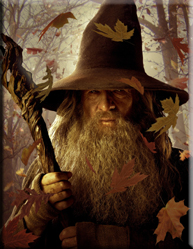
Magic is prevalent in fantasy fiction; and without it, fantasy does not exist. Mainly, magic is willed in the countless tales and books of fantasy by the likes of wizards, magicians, sorcerers, mages, druids, witches, and other types of characters. Wizard is the name mostly used in fantasy stories for a practitioner of magic (mostly male). Famous wizards in literature, such as Merlin, Gandalf and Harry Potter, have kept the wizard tradition alive and strong.

Traditionally, wizards have been depicted as tall, old and often bearded, in the likes of Merlin (Arthurian legend), Gandalf (Lord of the Rings), Allanon (Shannara Trilogy), and (beardless) Zedd (Wizard’s First Rule). However, the latest popular wizards like Harry Potter, Harry Dresden and Atticus O’Sullivan (The Iron Druid Chronicles) sport entirely more modern images.

Merlin is likely the most famous and most adapted of the wizards, spawned from Geoffrey of Monmouth’s 12TH century pseudo-history books, Historia Regum Britanniae; and later embellished by poet Robert de Boron, and many others afterward. From the original folklore, Merlin comes into being when an incubus (a demon in male form) impregnates a king’s daughter, which is why he has magic abilities. Robert de Boron’s version of Merlin’s story adds that Merlin’s mother has him baptized at birth, which liberates him from the power of Satan. Later tales formed the Merlin that we are accustomed to today—with him being the wizard advisor to King Arthur.

The wizards of Middle-earth are the Maiar, who were sent into creation by the (angelic) Valar to assist the elves and men of Middle-earth in contending with the dark lord, Sauron. Five wizards were sent, with Saruman the white as their chief. Gandalf the grey and Radagast the brown are the other two wizards that we are familiar with in Tolkien’s four books; but the “Blue Wizards”, Alatar and Pallando, are only mentioned in the Unfinished Tales edited by Christopher Tolkien.

Most other wizards in the genre do not hold such supernatural origins like the ones mentioned above. They’re generally people practicing the craft of magic, or inborn with the gift of it. Harry Potter had to become a student at Hogwarts School of Witchcraft and Wizardry to learn his magic abilities, even though his parents were wizards, but were killed when he was a baby. Harry Dresden had a wizard for a mother and a magician for a father; and he used his abilities to do his detective work. Kvothe (from the Kingkiller Chronicle) is not your typical wizard, but holds similar abilities, especially in book two when he is caught up in a battle. He learns his abilities at the University with subjects like Sympathy (sympathetic magic), Naming (a type of magic), and Alchemy.

While the old stereotypes of wizards may be fading, there is certainly no lack of creativity in the modern form of the genre for magic users. Whether they’re good, bad or gray, wizards continue to go strong in fantasy; even in the height of Urban Fantasy, in the growth of Flintlock Fantasy, and in their long reign in High/Epic Fantasy.


RELATED POSTS: 
The Dragon Ingredient 

Tuesday, August 13, 2013

Mormon Fantasy Authors


It has been a long discussion and debate over the past several years in regards to the reason(s) of why so many Mormons are successful writers of Science Fiction and Fantasy. It’s even a long discussion among Mormons themselves; many giving their different theories and assertions.

Since this is a blog that mainly focuses on fantasy fiction, I will try not to go too far into other genres of speculative fiction where there are a good portion of Mormon authors; but I would certainly have to bring up the mega success of Stephenie Meyer’s paranormal romance series, The Twilight Saga. I’ve never read the books nor have I seen the films (and probably never will), but I have certainly seen the mania that swept the world for the past several years.  

Orson Scott Card is probably the most successful in the Science Fiction and Fantasy genres when it comes to his awards and accomplishments, starting in the mid-80’s with Ender’s Game—which has finally been made into a movie, and releasing in theaters this November.

Tracy Hickman is well known for his Dragonlance books, collaborating with Margaret Weis, and also has many other works of fantasy that he’s written.

Brandon Sanderson is another best-selling author of fantasy, praised for his Mistborn trilogy, and honored to be the one chosen to complete the ultra-popular Wheel of Time series by Robert Jordan.  

A Mormon author that is probably the most acclaimed amongst the others that write YA Fantasy is Brandon Mull, with his Fablehaven books, and his latest YA Fantasy series, Beyonders.   

Dave Wolverton is popular for many works in SciFi/Fantasy, as well as a few Star Wars novels; but he is also well-known for his Runelords series, which were published under his pen name, David Farland.

John Brown is the author of Servant of a Dark God, which was published through Tor, and was supposed to be a series, but due to some “differences” in regards to the project, Mr. Brown and Tor mutually terminated the contract. The other two books in The Dark God series will be published independently by Mr. Brown.   

Anne Perry is not a SciFi/Fantasy author, as she is entirely famous for her Victorian-era mystery novels (in which I personally enjoyed a few books in her Thomas Pitt series); however, she wrote two novels, Tathea and Come Armageddon, which were categorized as fantasy, but are really more of religious allegory.

The list of authors above, of course, doesn’t cover all the Mormon writers in genre fiction, but it gives us a view of the success and impression that these folks of the Mormon faith have on speculative fiction. Some say that it is due to their belief in Mormon theology that these Latter-day Saints tend to be drawn to write almost exclusively in speculative fiction—as they explore their beliefs and imaginations through fiction. Others say that it is the close-knit writing community that the Mormons have. Some say it’s both. When reading statements from Orson Scott Card and Brandon Sanderson, as well as other Mormon writers (published and not published), regarding this subject, everyone seems to have their own opinions. I’m not Mormon, so I dare not debate the reasons, but it makes a lot of sense to me that if you have a tight community of people who love genre fiction, and they have a large focus on writing and reading in their schools and universities, then it’s obvious that you will see a lot of writers come out of that circle. Keep in mind that these are authors producing pretty good fiction, and published by major houses; so the classes and writing workshops must be doing something right. There’s also a lot of support within the community. So when you have successful writers teaching, inspiring and supporting aspiring authors in the community, it makes fertile ground for more successful writers to sprout out of.

People say that there is a disproportion of SciFi/Fantasy writers that are of the Mormon faith, but I don’t really agree with that. Sure there are a lot of authors in the genre that are Mormon, but I would not say that they dominate the genre. There are still more authors who do not profess a religion or have a different belief system. The real dominating community in the genre is geeks (people who love fantasy and role-playing games).

The good thing about Mormon authors is that they are moral writers. I feel that the fantasy genre started off in the beginning with stories that encouraged morals. Today, that is missing in the genre, especially with the rise of dark and gritty fantasy and urban fantasy. You can pretty much rest assured that when you pickup a book by Tracy Hickman you’re not going to find scenes of sex or foul language. Even Stephenie Meyer’s Twilight series had the main character saving herself for marriage. Imagine if Laurell K Hamilton or Sherrilyn Kenyon had written the Twilight books; Bella would’ve been getting it on with the vampire and the werewolf—at the same time.

That’s the great thing about the fantasy genre: that folks of all walks of life and beliefs can write and read in the genre; and we all can enjoy multiple types of stories according to our tastes. Lovers of fantasy fiction are a community of their own, made up of many types of people.